
How to Use AI for Small Business Growth

How to Use AI for Small Business Growth

Published: March 23, 2026 Read time: ≈ 9 min Word count: ~2,100 Updated: Weekly

Small Businesses Are Winning With AI — Here's How

For decades, enterprise-level automation and intelligence tools were out of reach for small business owners. Not anymore. In 2026, the same AI capabilities that power Fortune 500 operations are available for $20 a month — or less. If you’re a small business owner who’s been watching from the sidelines, this is the guide to step onto the field.
Learning how to use AI for small business growth isn’t about replacing your team or rethinking your entire strategy overnight. It’s about identifying the specific bottlenecks in your business and deploying targeted AI tools that eliminate them. This guide shows you exactly how to do that — by category, by budget, and by skill level.

The Opportunity: A 2025 Salesforce report found that small businesses using AI tools grow revenue at 2.3× the rate of non-AI adopters in the same industry. The gap is widening every quarter.

To understand the broader landscape of tools available to you, first review the best AI Tools for Business in 2026 it gives the complete comparative overview that this article builds on.

Why AI Is a Game-Changer for Small Business in 2026

Small businesses operate under constraints that large companies don’t: tighter margins, smaller teams, fewer specialists. AI tools directly address each of these constraints. A one-person operation can now publish daily SEO content, respond to customer queries 24/7, run personalised email campaigns, and analyse business performance — all automatically.

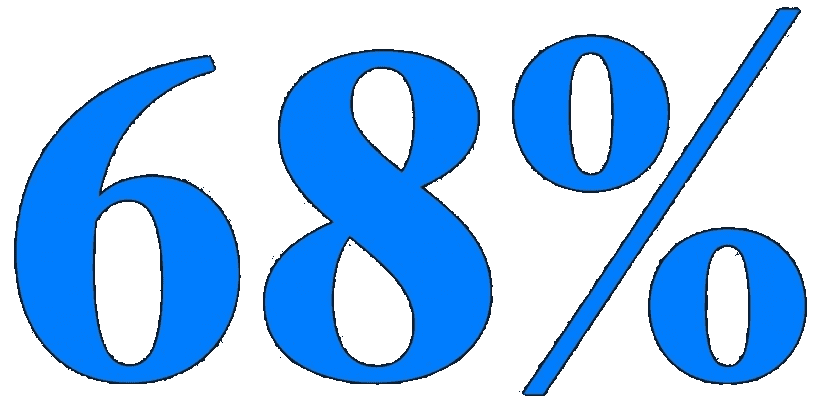
of small businesses using AI report cost savings in their first 90 days

more content produced by businesses using AI writing tools
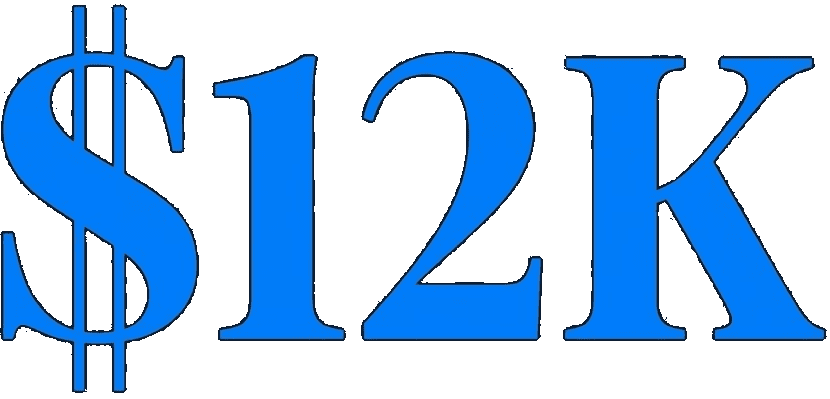
average annual savings per employee for AI-augmented SMBs

of AI-adopting SMBs report improved customer satisfaction scores
These numbers aren’t abstract — they reflect real shifts in operational capacity. The key insight is that AI doesn’t scale your team; it scales your output per team member. That’s the leverage point small businesses need most.

5 Core Areas Where AI Grows Small Businesses

1. Content Marketing & SEO

Content is the primary acquisition channel for most small businesses in 2026. AI tools now allow you to research keywords, write long-form articles, optimise for search intent, and publish consistently — all at a fraction of the cost of hiring writers. best AI Tools for Business in 2026 gives you the exact stack to set this up.
The SEO advantage is compounding: more content means more indexed pages, more traffic, more leads. Pair your content AI with a solid understanding of what backlinks are and why they matter and you’re building real search authority.

2. Customer Support Automation

AI chatbots in 2026 handle 60–80% of customer queries without human intervention. Tools like Tidio, Intercom AI, and Zendesk AI learn from your past conversations and improve over time. This means you can offer 24/7 support without a support team — a massive competitive advantage over businesses that only respond during business hours.

3. Email Marketing & Lead Nurturing

AI-powered email tools like HubSpot, Klaviyo AI, and ActiveCampaign now write subject lines, personalise content per recipient, determine optimal send times, and automatically segment lists. Small businesses using AI email tools see open rates 40–60% above industry average, according to Mailchimp’s 2025 benchmarks.

4. Business Automation & Admin

Repetitive admin tasks — invoicing, scheduling, data entry, report generation — can all be automated with tools like Make (Integromat) and Zapier. See our deep dive on AI workflow automation for beginnersfor step-by-step instructions on building your first automation.

5. Social Media & Brand Building

AI tools can research trending topics, write captions, design graphics (Canva AI, Adobe Firefly), schedule posts, and analyse engagement — turning social media from a time drain into a growth engine. Understanding how AI is transforming digital marketing gives you context for how these tools fit the bigger picture.

Your Starter AI Stack: Budget-Smart Recommendations

#01

ChatGPT Plus

AI Core
Your primary thinking and writing partner. Use for content, email drafts, strategy brainstorming, customer FAQs, product descriptions, and more.
$20/mo
★ 5 / 5
#02

Make (Free Plan)

Automation
Build workflows connecting your tools. Start with free tier — it handles most SMB automation needs without any coding required.
Free / $9+
★ 5 / 5
#03

Tidio AI

Support
AI chatbot with a generous free tier. Handles FAQs, product questions, and lead capture around the clock.
Free / $29+
★ 4 / 5
#04

Surfer SEO

SEO
Tells you exactly how to structure and write content to rank. The fastest path from content to Google page one.
$89/mo
★ 5 / 5
#05

Klaviyo AI

Email
AI-powered email and SMS marketing. Built specifically for eCommerce but works brilliantly for any product-based small business.
Free / $20+
★ 4 / 5
#06

Canva AI

Design
Generate social graphics, logos, presentations, and ad creatives with AI-powered design tools. No design experience needed.
Free / $13+
★ 4 / 5

Total Monthly Investment (starter stack): You can get an enterprise-grade AI capability for under $50/month using the free tiers of Make, Tidio, and Canva, combined with ChatGPT Plus at $20. Most small businesses recoup this within their first week of use.

AI Growth Strategy: A Step-by-Step Framework

Audit Your Time Drains

Spend one week logging every repetitive task you or your team does. Customer emails, social posts, reporting, data entry — everything. This list becomes your automation roadmap.

Prioritise by Impact.

Rank tasks by time consumed vs. revenue impact. Start automating the highest-time, lower-creativity tasks first. Scheduling posts, replying to common enquiries, generating first drafts — these are your quick wins.

Build One Automation at a Time.

Don't try to automate everything at once. Build one workflow, let it run for two weeks, measure it, then build the next. Sustainable AI adoption is sequential, not simultaneous.

Keep Humans in the Loop for High-Stakes Tasks.

AI handles volume; humans handle nuance. Customer complaints, complex sales conversations, and strategic decisions should always have human review. Read our comparison of AI vs human content and what works better for SEO for a clear framework on where to draw that line.

Measure & Optimise Monthly.

Set KPIs for each AI implementation: time saved, conversion rates, cost per lead. Review monthly and kill tools that aren't delivering. Keep what works, replace what doesn't.

Common Mistakes Small Businesses Make With AI

1

Using AI to replace strategy, not execute it.

AI amplifies your strategy — it doesn't create it. A poorly conceived marketing plan executed faster by AI is still a poor plan. Always set the direction yourself.
2

Skipping the human editing step for published content.

I content is a first draft, not a final product. Always review AI-generated content before publishing, especially for tone, accuracy, and brand voice alignment. This is especially important for eCommerce product descriptions, where accuracy directly affects conversions.
3

Not training your AI tools on your brand.

ChatGPT doesn't know your tone, your customers, or your product advantages unless you tell it. Invest time in building detailed prompts and system instructions that encode your brand voice.
4

Ignoring data privacy.

Don't paste customer data into public AI tools. Understand the data policies of every tool you use. Most enterprise tiers offer private, compliant data handling.

Measuring AI ROI for Small Business

AI ROI for small business comes in two forms: direct cost savings (replacing tasks that previously required paid help) and revenue acceleration (faster content, better marketing, higher conversion). Track both.
AI USE CASETIME SAVEDCOST REDUCTIONREVENUE IMPACT
AI content writing8–12 hrs$400–$800+15–30% organic traffic
AI customer support10–15 hrs$500–$1,000+20% satisfaction score
Email automation4–6 hrs$200–$400+35% email revenue
Social media AI5–8 hrs$250–$500+40% engagement
Admin automation6–10 hrs$300–$600Indirect (team focus)

What's Coming: AI for SMBs in Late 2026

The next wave of AI tools for small businesses will be fully autonomous agents — AI that doesn’t just assist with tasks, but takes entire workflows end-to-end without supervision. We’re already seeing early versions of this in tools like Salesforce Agentforce and HubSpot Breeze AI. To stay ahead, read our full analysis of the future of AI in business
The small businesses that invest in understanding and implementing AI today will have a structural advantage that compounds year over year. The ones that wait are playing catch-up in a race that only gets faster.

Frequently Asked Questions

You can start for as little as $20–$50/month with ChatGPT Plus and free tiers of Make, Tidio, and Canva. A complete SMB AI stack with premium tools typically costs $100–$300/month and delivers returns many times that investment.

No. The majority of top AI tools for small business — including ChatGPT, Make, Tidio, Canva AI, and HubSpot — require zero coding. If you can use a browser and type, you can use these tools effectively.

AI tools augment your team's capacity rather than replacing individuals. A team of 3 using AI can produce what a team of 8 did previously — meaning you can grow output without growing headcount, or focus your team on higher-value work.

ChatGPT Plus ($20/mo) is the best starting point for most small businesses. It handles writing, research, planning, customer communication drafts, and more. Once you're comfortable, add a workflow automation tool like Make. See best AI tools for business 2026LINK for the full ranked list.

Grow smarter with AI in 2026.

Weekly AI tools, strategies and case studies — straight to your inbox. No spam.