
01 / PLAN
Planning
Every campaign starts with research, website analysis, competitor reviews, keyword selection, and a clear action plan.
The best SEO services in the USA give you proof, not promises. That means an audit with findings, a keyword plan, edited pages, useful content, accurate local listings, earned links, and a monthly report. Digital Root documents each deliverable, and this page shows what each one should look like and a check you can run yourself.
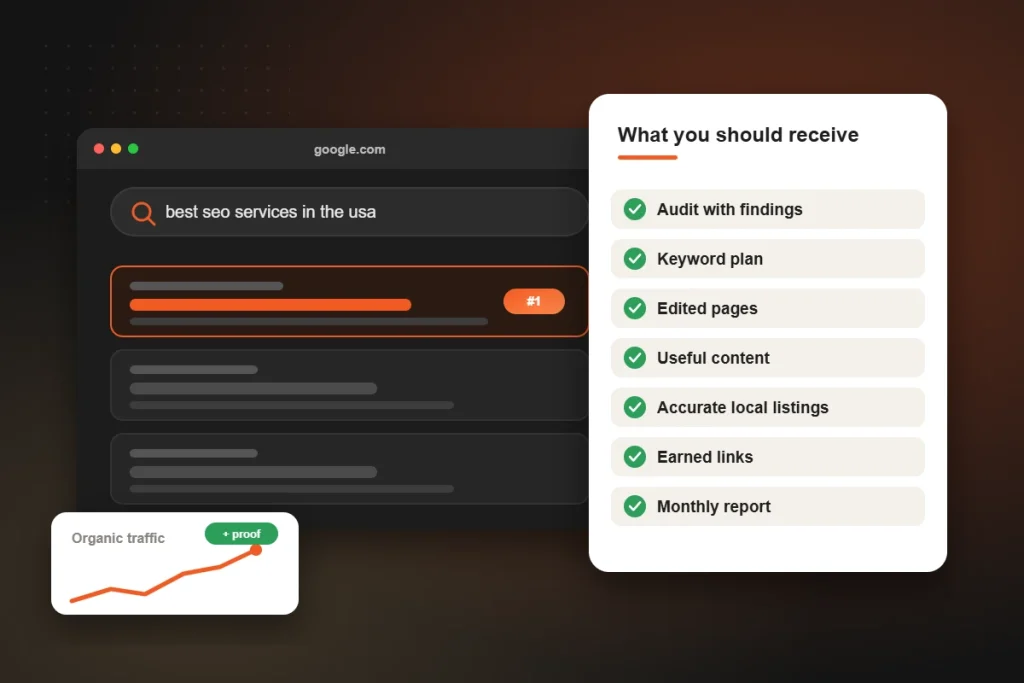
Judge the best SEO services in the USA by what they hand over, because a deliverable can be inspected. Providers worth hiring show their work. Rankings move for many reasons, and they take time. A finished audit, a rewritten title, or a live listing either exists or it does not.
SEO deliverables also protect you when the work changes hands. If a report names the pages touched and the changes made, a new provider can pick up where the last one stopped. A report that only says "optimized the site" leaves nobody able to tell what happened.
This page covers the work product. For the rules a provider should follow, read our guide to white-hat SEO standards. For the paperwork around scope and terms, see how a written SEO agreement is built. For content in depth, our page on people-first content goes further.
Each of the services below produces a specific document or change that you can check in a few minutes. The table shows seven services that make up the best SEO services in the USA, what you should receive, and one check that does not need an expert.
Each service below has a clear shape, with a good deliverable and one check you can run without help. Treat the checks as a first screen, not a full inspection. When something looks wrong, ask the provider to explain it before drawing conclusions.
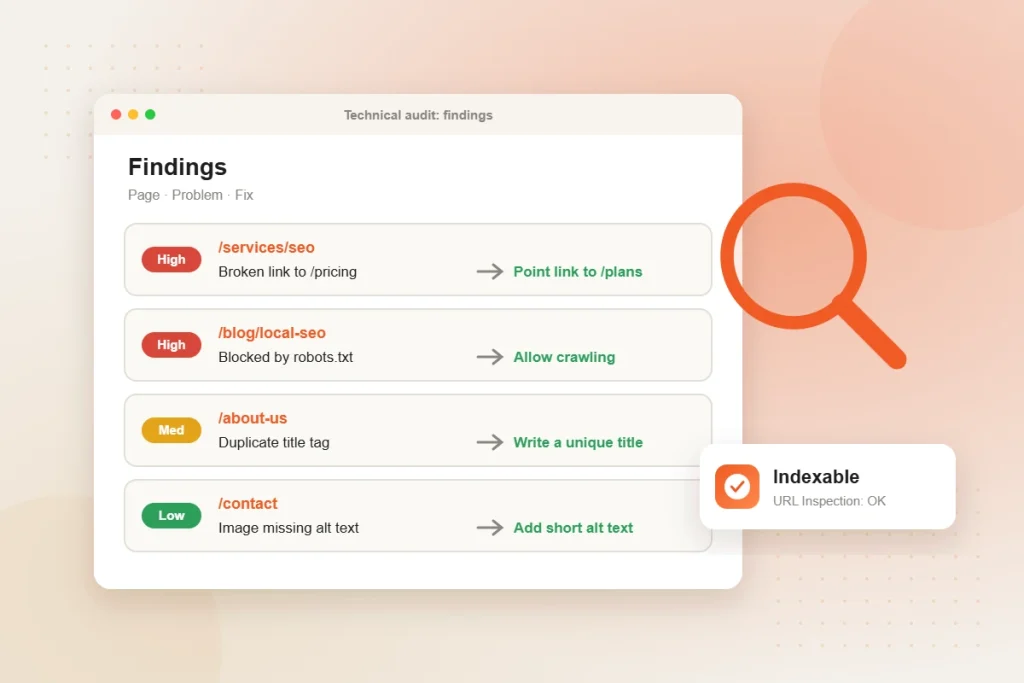
A good technical audit is a written list of findings, not a score from a tool. Each finding names the affected page, explains the problem in plain language, and states the fix. Problems that block Google from reading your site come first, and small tidy-ups come last.
Your check. Pick one finding, such as a broken link, and open the page it names. You should see the problem within a minute. After the fix, use the URL Inspection tool in Search Console. Type the full address into the search bar at the top of any Search Console screen. The tool shows what Google has stored for that page, including whether it can be indexed and which canonical page Google selected. Google describes these steps on its URL Inspection tool help page.
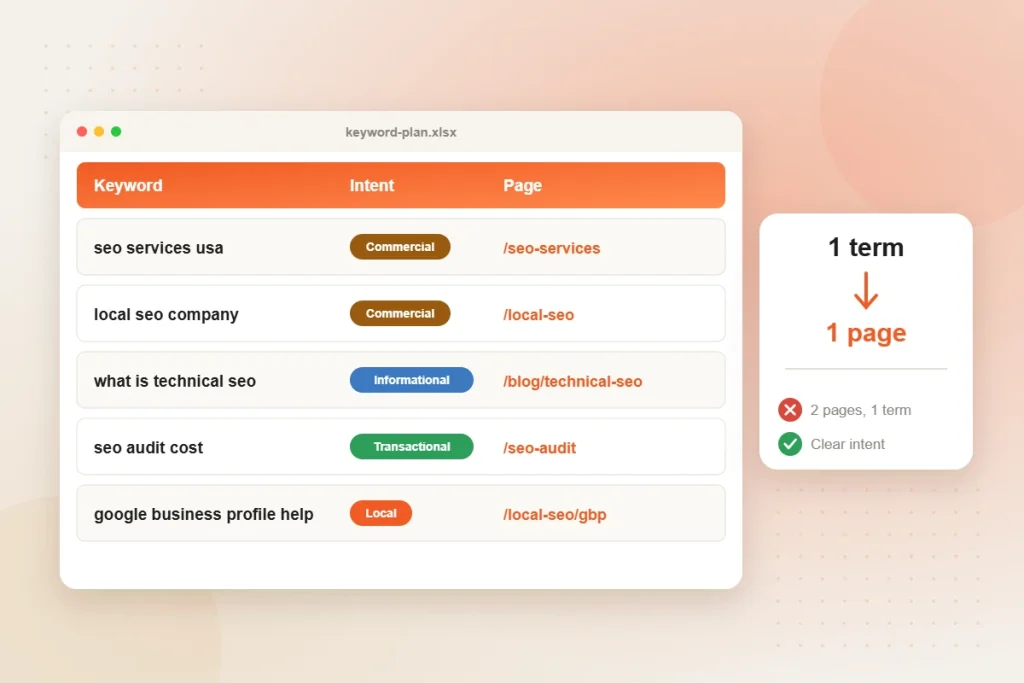
Good keyword research is a spreadsheet you can read. Each term has a search intent, which is the reason a person types it, and each term is matched to one page on your site. Two pages chasing the same term is a warning sign, because they compete with each other.
Your check. Search two terms from the list in a private browser window, as a buyer would. Mostly shops in the results, with an article as your planned page, means the match is wrong. A short list that fits your business beats a long list copied from a tool.
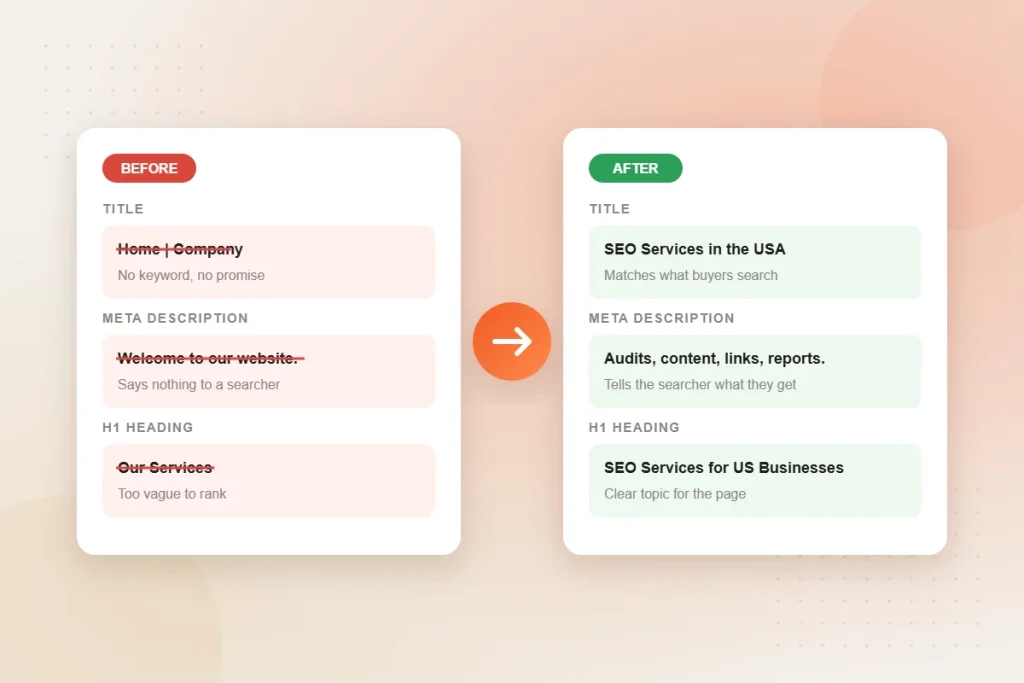
On-page work changes what visitors and search engines read on each page. The deliverable is a record of the edits, listed page by page, with the old and new wording side by side. Titles, descriptions, and headings are the first things to look for.
Your check. Open the page, right-click, and choose to view the page source. Search for title and read the line. It should match the title in the record and describe the page in plain words. Search for canonical and confirm the address points to the page itself.
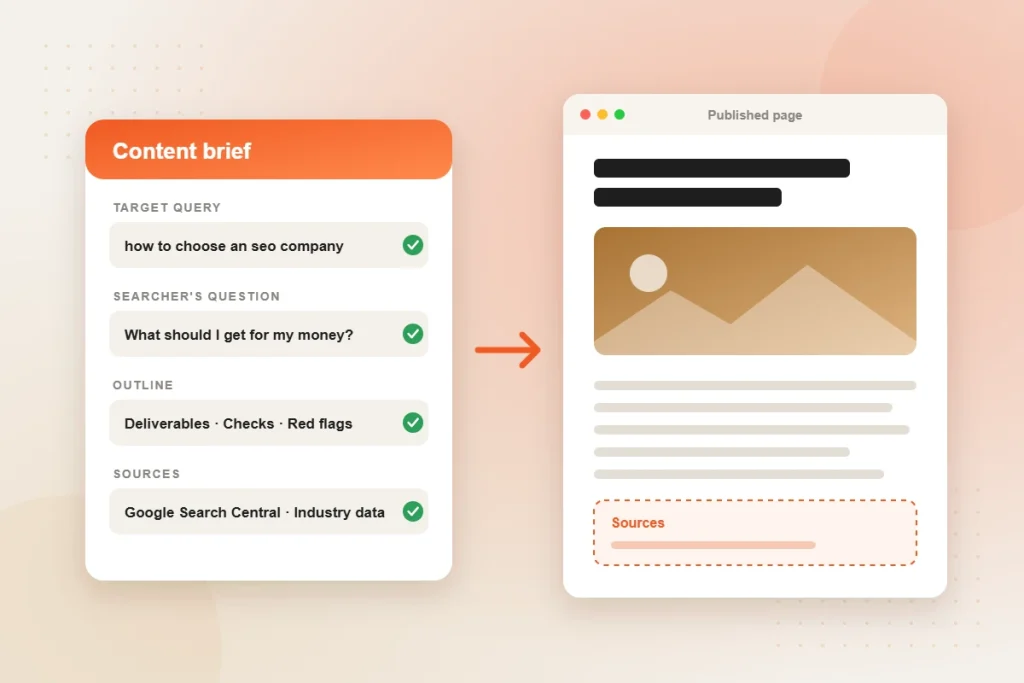
Good content follows a written brief, answers the question a searcher actually has, and names its sources. The deliverable is the finished page plus the brief behind it. A brief shows the topic, the reader, the keyword, and the facts to include.
Your check. Read the first paragraph aloud. If it sounds like it could describe any business, it is too generic. Look for a named author or reviewer, and click one outside link to confirm it supports the claim beside it. Our guide to E-E-A-T and editorial process explains what a strong page contains.
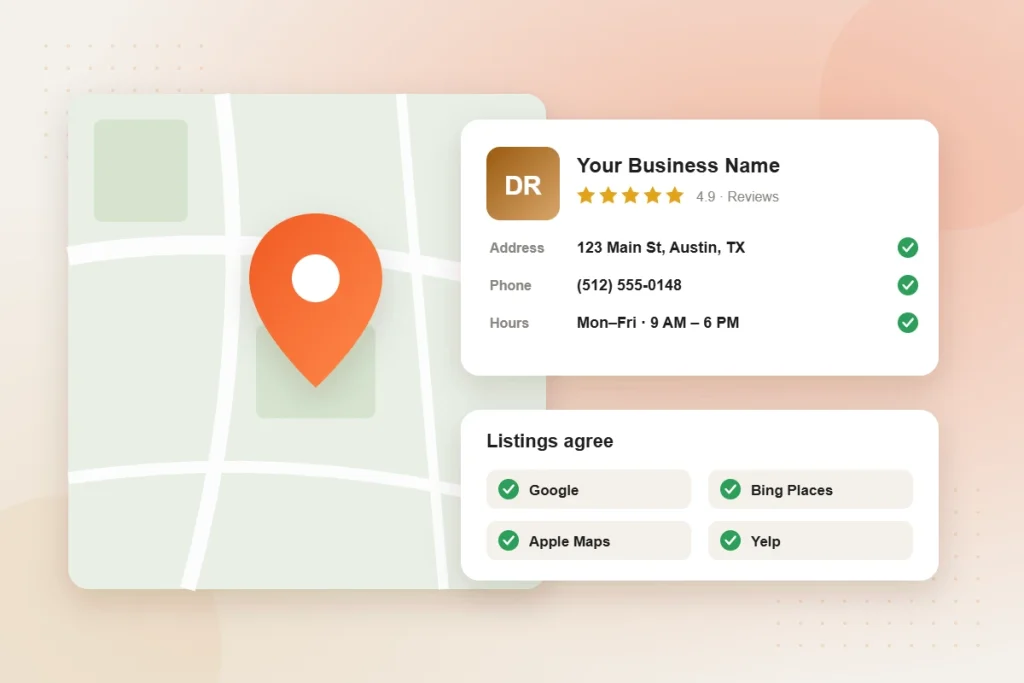
Local work produces two things you can see, a complete Google Business Profile and listings that agree with each other. The profile should carry the right name, address, phone number, hours, categories, and photos. Listings on other directories should repeat the same details exactly. Our pages on local SEO and profile optimization give more detail.
Your check. Search your business name on Google Maps, then compare every detail with your own records. Check the opening hours against the real ones, and call the listed number. A wrong phone number or old address is the most common sign that local work was rushed.
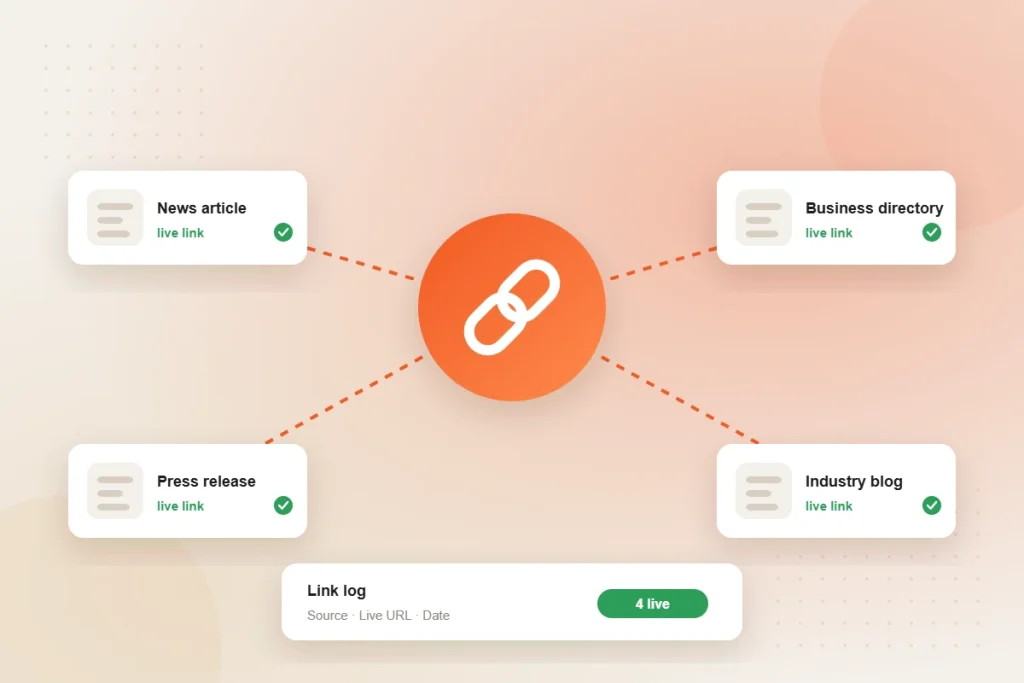
Link earning means getting other real websites to mention yours. The deliverable is a log: each article, business listing, press release, or outreach piece, with its live address and the date it went up. Quality matters more than count, so the log should also say why each site fits your business.
Your check. Open five addresses from the log. Each page should load, mention your business, and sit on a site that serves a real audience. Sites that look like empty directories deserve a question about why they were chosen.
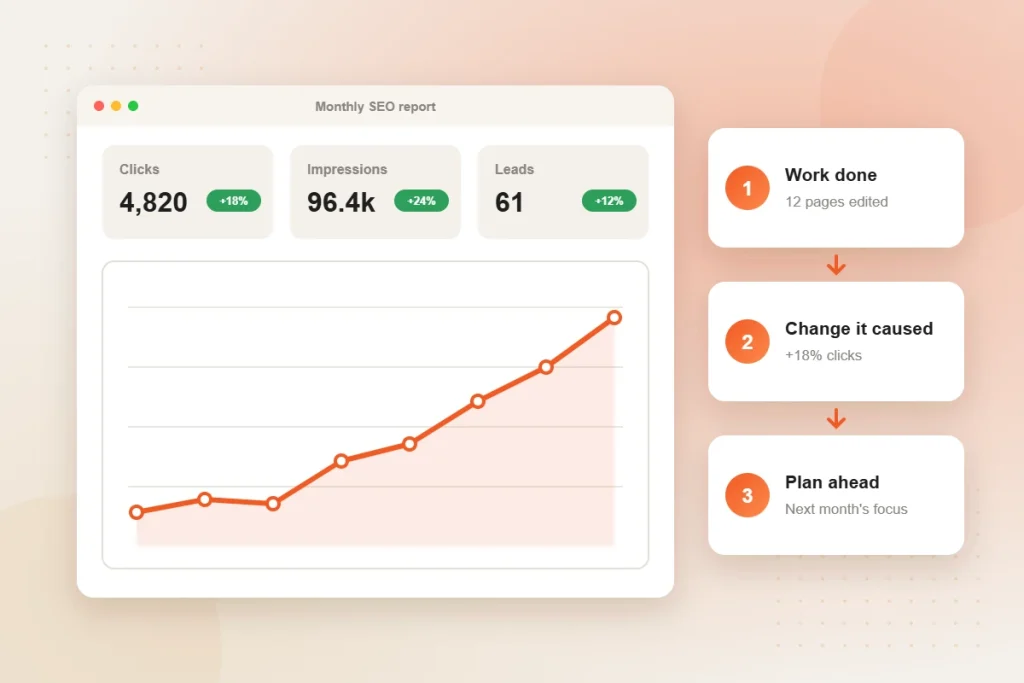
A good report connects work to outcomes. It lists the work done, the change it caused, and the plan ahead. Digital Root plans include three monthly reports, each on a different area of the work.
Your check. Log in to Google Analytics and Search Console, then compare the traffic and search figures with the report. Small differences are normal because tools count in different ways. Large gaps deserve a question.
A basic SEO audit checklist takes a few short sessions, and it repeats the checks above in a fixed order. It does not replace a professional audit, but it shows whether the one you were given is accurate, which helps when you weigh up several providers, including the best SEO services in the USA.
For a full review, our digital marketing audit page explains the broader service.
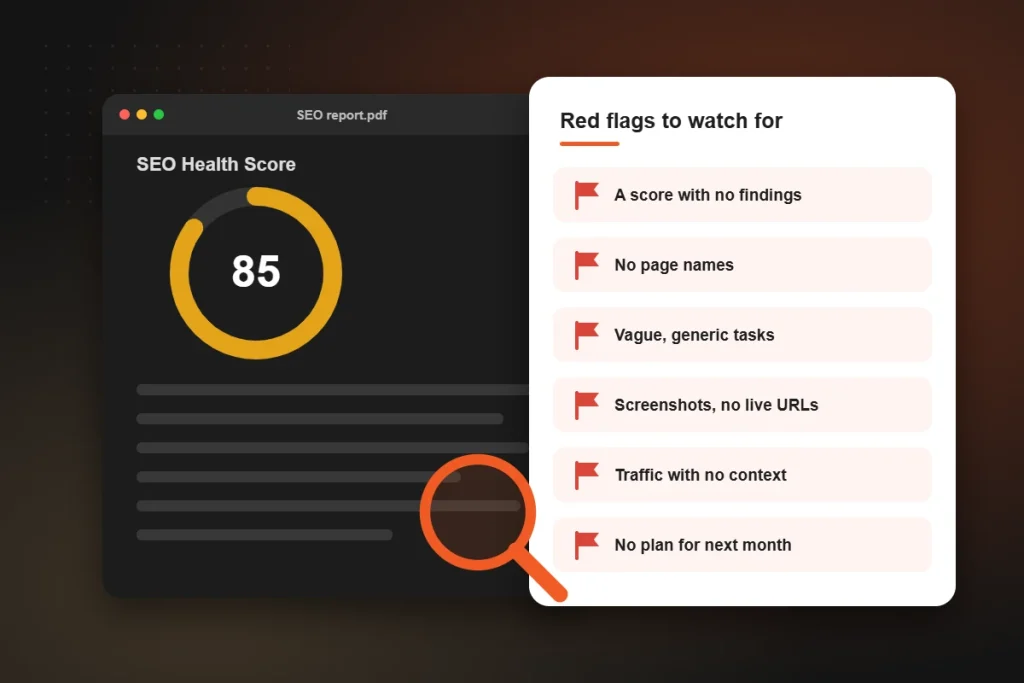
Even the best SEO services in the USA can slip into padding, and a padded deliverable looks busy but tells you nothing to act on. These six patterns show up often enough to watch for during any round of SEO quality checks.
A long audit of tool screenshots, with no page named and no fix suggested, is filler.
Wording that could fit any website means nobody looked at yours.
A line such as "worked on links" cannot be verified without a date and an address.
"Posted five times" is a task, not a result.
A claim of improved positions needs the terms, the starting point, and the date.
If a report needs a glossary to be read, ask for plain language.
None of these proves bad intent, since busy teams sometimes write thin reports. Still, each one calls for a request to see a clearer version, and a good provider will supply it.
06- Our process
Digital Root records its work at each stage so you can check it. Each plan on the SEO packages page includes the same four kinds of record, which make the SEO deliverables easy to review:
Every campaign starts with research, website analysis, competitor reviews, keyword selection, and a clear action plan.
The team puts the strategy into action by implementing technical improvements, optimizing website pages, creating useful content, improving local listings, and building relevant links.
Completed work is reviewed to identify errors and confirm that changes function as expected.
SEO performance is monitored regularly using analytics, ranking data, and search reports.
Plans also add work by tier, so Digital Root's best SEO services in the USA grow with your budget. Silver and above include Google Business Profile optimization, Gold and above add geotagging, and Premium adds GEO and AEO. Our team in North Canton, Ohio, serves businesses across the country remotely. To see how services fit together, visit our SEO services hub.
In the best SEO services in the USA, a deliverable is something you can open and check, such as an audit, a keyword list, or a report. A result is an outcome, such as more calls or sales. Deliverables are within a provider's direct control, while results also depend on competition, your site, and Google. Good providers show both and explain how they connect.
Use the URL Inspection tool in Search Console. Enter the full address of the page, and the tool reports what Google has stored for it. You can also run a live test to see whether a page might be indexable. You need to be a verified owner or user of the site, so ask your provider for access if you do not have it.
No. Open the page in your browser, right-click, and choose the option to view the page source. Use the search shortcut to find the word title, then read the text beside it. You are only checking that the words match the record and describe the page. Ask your provider to walk you through it once.
Ask for an explanation before you assume the work is wrong, even with the best SEO services in the USA. Send the exact page, address, or figure you checked, and describe what you saw. A clear question gets a clear answer. If the same kind of problem keeps appearing, raise it with your account contact and ask for a corrected version in writing.
Yes, and the best SEO services in the USA share it without fuss. A spreadsheet lets you sort, filter, and compare terms against your own knowledge of your customers. It should show each term, its search intent, and the page it is matched to. A list that lives only inside a tool you cannot open makes it hard to review the work or move it to another provider.
When you hire an agency, a quick pass after each monthly report is enough for most businesses. Spot checks keep the provider honest and keep you informed without taking much time. Run the checks again after any big change, such as a site redesign, a move to a new address, or a switch of provider.